
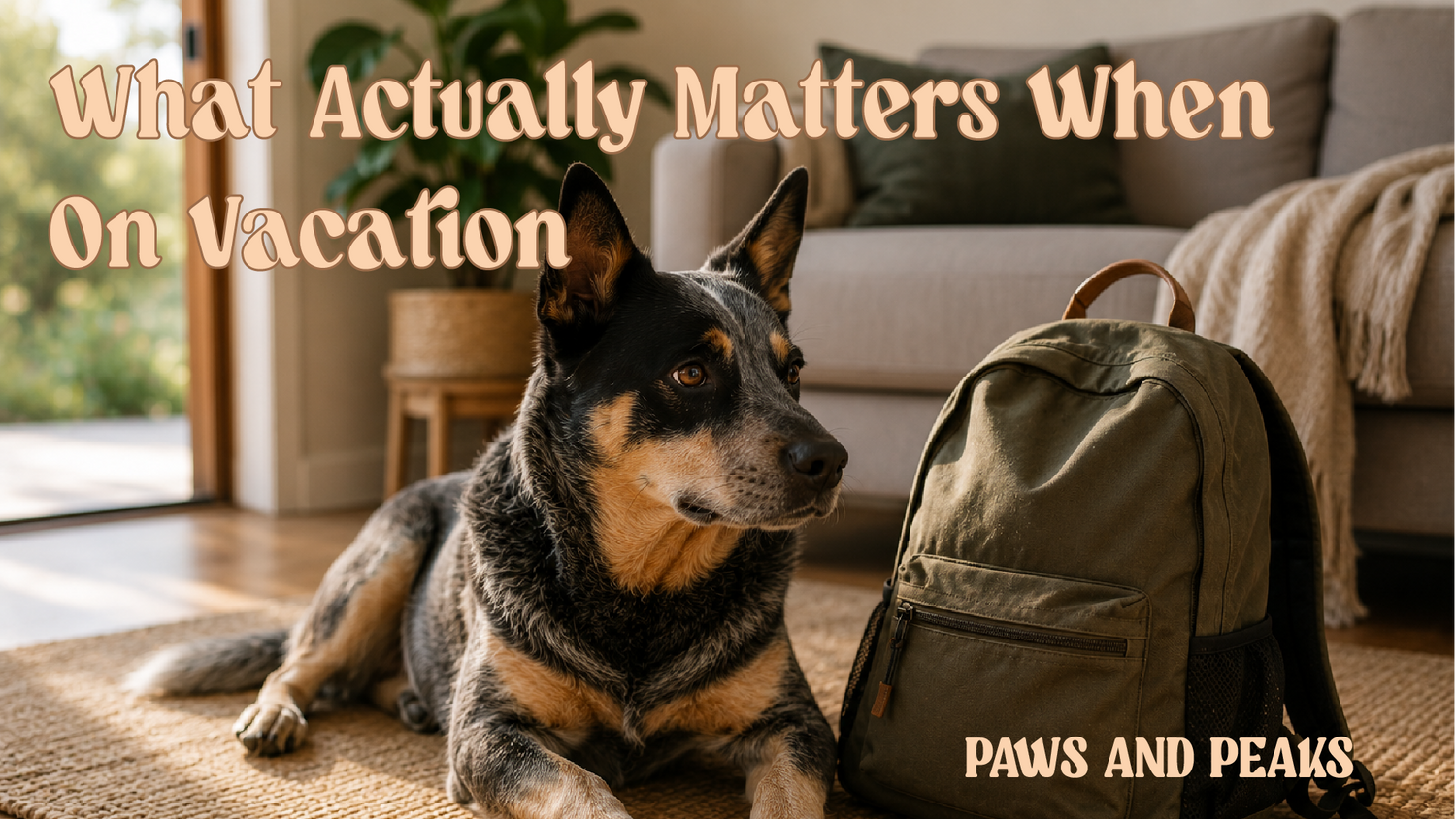
Dog care when on vacation is something I think about every time I head outdoors with George.
I still remember the first time I took my dog George out on a proper bush walk.
It was one of those days where everything felt easy. Clear track. Cool weather. Happy dog trotting just ahead, ears bouncing with every step.
Nothing about that day looked like an emergency.
That is exactly why preparedness matters.
Preparedness is not about expecting things to go wrong.
It is about accepting that they can, and quietly deciding to be ready anyway. That mindset is central to Dog Care When on Vacation, especially when you are exploring unfamiliar environments.
As a vet nurse and a dog owner, I see both sides. I see the calm, organised person who has thought ahead. I also see the owners who arrive at the clinic shaking, saying I did not know what to do.
My goal with this blog is simple.
By the time you finish reading, you will understand:
1. What preparedness really means in day to day life
2. The real risks that come with outdoor adventures
3. What to pack and how to think ahead
4. How being prepared changes the way you feel on every walk, hike or trip
This is not about being dramatic. It is about being intentional. It is about caring for dogs in a way that is steady and proactive.
What Preparedness Really Means for Dog Owners?
When people hear the word preparedness, they often picture extreme situations. Snakes. Broken bones. Major trauma.
In reality, most of the emergencies I see as a vet nurse are simple things that got complicated because no one was ready.
Preparedness, especially when thinking about dog care when on vacation, looks like this:
1. You have basic supplies with you
2. You know how to use them
3. You have thought through what you would do if something went wrong
4. You stay calmer because you have a plan
It is not about carrying a full clinic in your backpack.
It is about having enough knowledge and tools to bridge the gap between the moment something happens and the moment you can get proper vet care. At its core, it is about understanding your dog needs before problems arise.
Looking for ways to prepare your dog for a vacation adventure? Discover vet-approved advice in dog care tips by a vet nurse to stay responsible and stress-free.
A Real Moment With George
On that bush walk with George, nothing dramatic happened. That is the point.
He brushed past a low shrub, jumped over a log, and kept going. At one point he landed a bit awkwardly and gave a small yelp. He took a few steps, then walked normally again.
Old me, before vet nursing, would have thought:
He is fine. Dogs are tough.
Current me did something different.
I stopped.
I checked his paws.
I ran my fingers along his legs.
I watched the way he placed his feet when we started walking again.
I also knew that if he did cut his paw or pull a muscle, I had:
• Saline
• Gauze
• A basic bandage
• Vet wrap
• A spare lead
• A way to call for help
Nothing went wrong that day.
But I was ready if it did.
That is what preparedness feels like. Quiet. Steady. In the background. It is a daily part of dog care when on vacation, not just something you think about when travelling far away.
Why Preparedness Matters Outdoors
Nature is beautiful, but it is not controlled.
The outdoors adds variables you cannot fully predict:
1. Uneven ground
2. Loose rocks
3. Hot sand or sharp shells at the beach
4. Grass seeds and burrs
5. Sticks that splinter
6. Hidden holes
7. Wildlife and insects
8. Sudden weather changes
Most issues start small. The problem is not always the injury itself.
The problem is the time between injury and treatment.
With no preparation, that time is filled with:
1. Panic
2. Guessing
3. Google searches that contradict each other
4. Regret about what you do not have with you
With preparation, that time is filled with:
1. Clear steps
2. Simple first aid
3. Calm observation
4. A focused plan to get to a vet
This is especially important when travelling with dogs, where you may not know the area or have immediate access to your usual clinic.
Common Situations I See as a Vet Nurse
Here are some real examples of how small things escalate when owners are not prepared.
1. Paw cuts
• Often from glass, rocks, shells, or sharp sticks
• They bleed a lot, which looks dramatic
• Owners often have nothing clean to apply pressure with
• Dogs walk on the wound, which makes it worse
2. Grass seeds
• Get stuck between toes or in the ear
• Cause redness, swelling, and pain
• Can migrate deeper into the skin over time
• Often ignored until the dog is very sore
3. Heat stress
• Long walks in the middle of the day
• Not enough shade or water
• Dogs who will not slow down
• Owners unsure when it has gone from tired to dangerous
4. Minor scrapes and skin wounds
• Often left uncleaned
• Owners add creams that are not dog safe
• Infection develops over the next few days
In many of these cases, simple first steps at the time could have made a big difference. That is why Dog Care When on Vacation should always include basic preparation, not assumptions.
What Preparedness Looks Like in Practice?
Preparedness is both mental and practical.
1. Mentally Prepared
Being mentally prepared means you:
• Accept that accidents can happen even on easy walks
• Tell yourself in advance I will stay calm and do the next best thing
• Understand your dog is depending on you to lead the situation
• Know the difference between something you can manage briefly and something that needs immediate vet care
2. Practically Prepared
Being practically prepared means you carry:
• A compact dog first aid kit
• Fresh water and a collapsible bowl
• A secure collar or harness with ID
• A lead that you can rely on
• Poo bags
• Your phone with enough battery
• A towel or light blanket in the car
It does not need to be complicated.
It needs to be consistent. That consistency is part of long term dog maintenance and responsible maintenance for dogs.
What I Always Pack For George
When I take George on outdoor adventures, this is my non negotiable list.
1. Basic first aid items
• Saline pods or a small bottle of saline
• Non stick gauze pads
• Cotton pads or swabs
• Conforming bandage
• Vet wrap
• Small blunt ended scissors
• Tweezers
• Alcohol free wipes suitable for dogs
• A pair of disposable gloves
2. Environmental support
• Collapsible water bowl
• Sufficient water for both of us
• Light towel or cloth
• Extra lead
• High value treats, in case I need to keep him still
I also keep a more complete first aid kit in the car. The small kit travels with us on the walk.
Looking for ways to balance fun and responsibility while vacationing with your dog? Discover strategies in responsibilities of dog owner to stay confident and organized on every trip.
How Preparedness Changes Your Confidence?
Preparedness is not only about responding to problems. It actually changes how you feel from the moment you leave the house.
When I know I am ready, I:
• Notice more, because I am not distracted by worry
• Let George explore within safe boundaries
• Feel calmer about small scrapes or bumps
• Recover faster from surprises
For you, that might look like:
• Being less anxious in remote places
• Feeling comfortable taking your dog somewhere new
• Enjoying longer adventures because you are not afraid of every what if
Confidence does not come from nothing happening.
It comes from knowing you can handle it when something does. That confidence is the backbone of Dog Care When on Vacation and everyday life.
A Simple Preparedness Checklist Before You Leave Home
Use this as a quick run through before each walk or trip.
1. Dog basics
• Collar or harness fits properly
• ID tag is readable and up to date
• Lead is in good condition, no fraying
• Recall or response to their name is reasonably reliable
2. Environment check
• Weather is suitable for your dog, especially in heat
• You avoid the hottest part of the day where possible
• You know roughly where you are going and what the terrain is like
3. Gear check
• Dog first aid kit packed
• Water and bowl packed
• Treats packed
• Poo bags packed
• Phone charged
• Towel in the car if going to the beach or muddy areas
This takes less than five minutes when you are used to it. It is one of the simplest but most effective dog travel tips I share with owners.
When Something Actually goes Wrong?
Let us say you are out exploring and your dog suddenly yelps, limps, or comes back to you licking at a paw.
Here is how preparedness helps in real time.
Step 1: Pause and breathe
• Take a slow breath
• Remind yourself you are prepared
Step 2: Safe restraint
• Attach the lead if it is not already on
• Move your dog away from the immediate hazard
Step 3: Quick assessment
• Check paws, legs, and visible skin
• Look for obvious cuts, foreign objects, blood, or swelling
Step 4: Clean and protect
If you find a small cut:
• Rinse with saline
• Pat dry gently
• Apply a non stick pad
• Wrap with bandage and then vet wrap, not too tight
If you cannot see the problem but your dog is still very sore, or if there is heavy bleeding, deep wounds, or signs of heat stress, you:
1. Stop the activity
2. Keep them as calm and cool as possible
3. Call your vet and tell them what has happened
4. Head straight in for assessment
Preparedness does not mean you handle everything yourself.
It means you support your dog until you can get professional care. It reflects understanding what do dogs need in stressful moments.
Planning to make your vacation more meaningful with your dog? Discover tips on bonding with your dog to strengthen your connection while exploring together.
Preparedness is an Act of Care
For me, preparedness is a love language.
It is me saying to George:
I have thought about you.
I have planned for you.
I am ready to show up for you when it matters.
As a vet nurse, I see the difference it makes when owners are prepared. The dogs are more comfortable. The treatment is more straightforward. The outcomes are often better.
As a dog owner, I feel the difference in my own body. There is less panic. More clarity. More presence in the moment. That is the heart of Dog Care When on Vacation and everyday outdoor life.
Bringing It All Together
Preparedness when exploring with your dog is built from small, repeated choices:
1. Packing the same core items every time
2. Learning basic first aid skills
3. Understanding common risks in your local environment
4. Staying calm when something unexpected happens
5. Knowing when to stop and head to the vet
You do not need to be perfect. You do not need to have all the answers.
You just need to care enough to think ahead, carry the basics, and commit to being the steady person your dog can rely on.
That is what turns a normal walk, hike, or camping trip into something else.
Not just an adventure, but an adventure you are ready for, grounded in thoughtful taking care of pets.
