
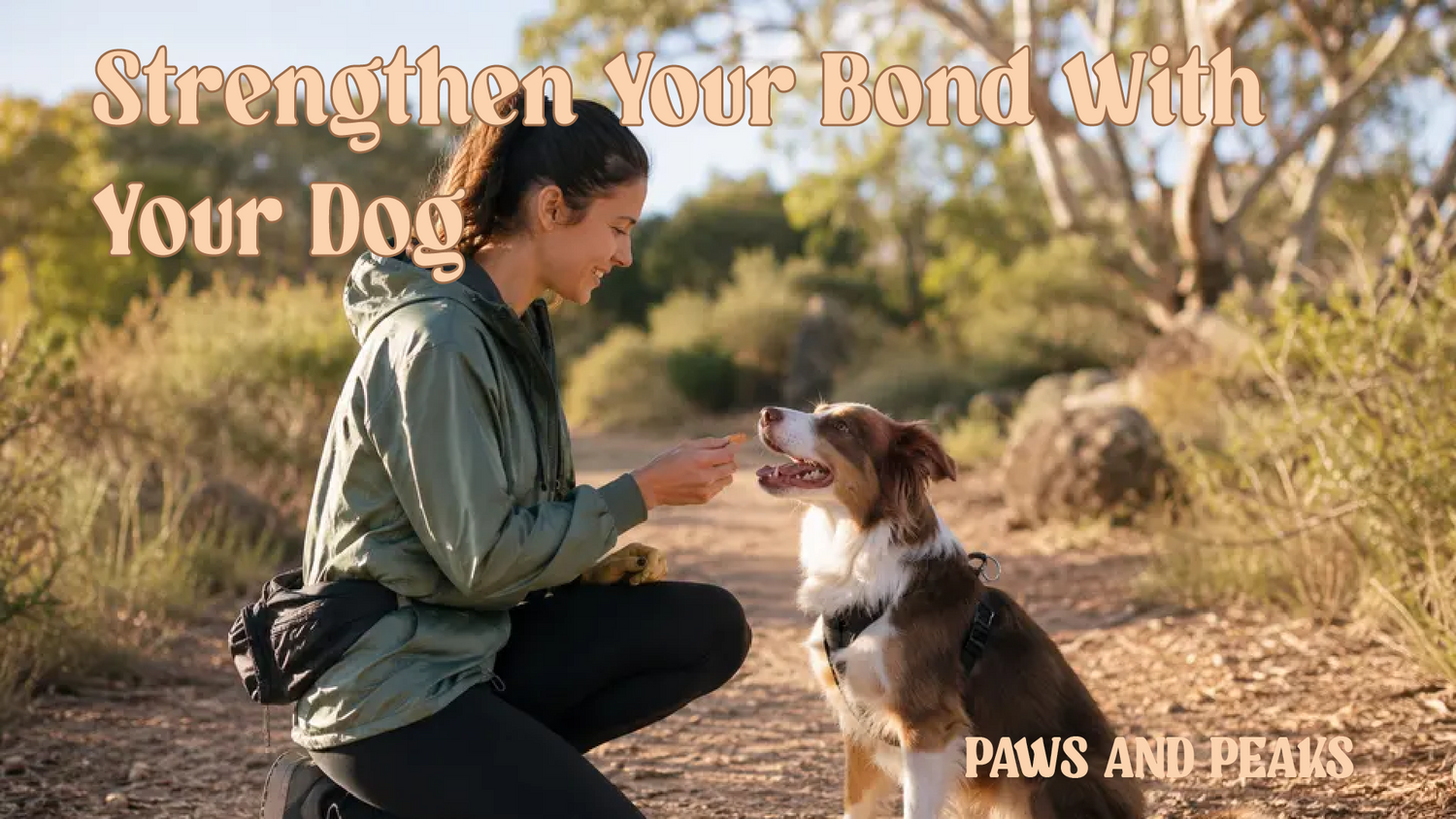
When people ask me ‘how to build a stronger bonding with your dog’, they often expect a training exercise or a specific routine. Something structured. Something formal.
But in my experience as a vet nurse and as a dog owner, the most meaningful connection does not start in training sessions.
It starts outside, and many of the most effective dog parenting tips begin there.
There is something about being in nature with your dog that lowers the noise of everyday life and sharpens the communication between you. It does not have to be long hikes or complicated adventures. Even a simple walk through bushland or a quiet track can shift the way you and your dog relate to one another.
In this blog, I want to explain how outdoor exploration naturally strengthens the bonding with your dog, using real moments with George as an example of how connection is built through small, intentional interactions.
Why Outdoor Exploration Creates Connection?
Indoors, life is structured. Predictable. Controlled.
Outdoors, everything becomes a conversation.
Your dog is constantly receiving new information: smells, sounds, textures, movement, weather, terrain.
And they naturally look to you to help interpret those changes.
This is where bonding with your dog happens.
Not from forcing anything, but from guiding, noticing, and responding.
Here is why the outdoors is one of the best environments for connection:
1. You slow down
2. Your dog becomes more aware of your responses
3. Shared experiences become shared reference points
4. You communicate more through body language
5. There is space to observe your dog without distraction
6. Trust builds through repeated positive experiences
Outdoors, you and your dog learn to read each other in a more natural, immediate way.
A Walk With George That Changed Everything
George always had a very particular way of exploring. Confident, curious, but still tuned in.
One morning on a bush trail, he moved ahead slightly, paused at a fork in the path, and looked back at me.
It wasn’t hesitation.
It wasn’t him asking permission.
It was a simple check in.
A quiet moment that said, I’m aware of you. Where are we going next?
I pointed to the left track, and he immediately shifted pace and followed.
That tiny pause, that little look over his shoulder, is what bonding outdoors looks like.
Not a dramatic moment.
Not a big gesture.
Just two beings moving through the world with awareness of one another.
Connection builds in these small, consistent moments.
The Role of Presence in Bonding with Your Dog
Being outdoors makes you present.
Your dog feels that instantly.
Presence looks like:
1. Watching how your dog interacts with the environment
2. Noticing their body language
3. Paying attention to energy shifts
4. Responding calmly and consistently
5. Matching your pace to theirs when needed
6. Adjusting your route or rhythm based on how they are coping
Dogs don’t need perfection from us.
They need presence.
The more present you are, the more clearly your dog understands your expectations, your boundaries, and your support. It is one of the most valuable parts of how to connect with your dog when you are parenting dogs.
Planning to turn your dog’s first outing into a bonding experience? Explore our blog on first dog adventures for enjoyable, safe, and memorable outdoor exploration.
Building Trust Through Shared Movement
Movement is one of the strongest bonding tools we have with our dogs.
When you walk, hike, or explore together, you build a rhythm that naturally encourages connection.
Here is how movement strengthens trust:
1. Your dog learns your pace
They start to anticipate how you move, when you slow down, when you pause, and when you redirect.
2. You learn their cues
Subtle shifts in posture, hesitations, or changes in tail movement become easier to read.
3. Communication becomes mutual
Your dog starts checking in with you more often, and you respond without overthinking it.
4. Confidence grows
Every successful outing reinforces safety and predictability.
5. Your dog feels supported without being micromanaged
The outdoors gives both freedom and structure, which is the perfect mix for connection.
These are not complicated strategies. They are practical parenting tips that strengthen trust naturally and help in bonding with your dog.
The Power of Letting Your Dog Lead (Sometimes)
Bonding is not only about teaching your dog to follow.
It is also about letting them show you how they see the world.
When it is safe, letting your dog take the lead for short stretches teaches them that:
1. Their choices matter
2. You respect their curiosity
3. Exploration is encouraged
4. They can move independently while still staying connected to you
With George, I often let him choose which way to go at small track splits. It didn’t change the overall walk, but it strengthened our communication.
He learned that:
1. I was engaged
2. I paid attention to his preferences
3. We were a team rather than two separate beings walking the same track
This approach reflects one of the thoughtful ways to bond with your dog that focus on relationship rather than control.
Looking for ways to care for your dog while traveling together? Discover helpful insights on how to do dog care on vacation to keep your dog happy and relaxed during trips.
Creating Predictable Patterns Outdoors
Dogs love patterns.
Not routines that never change, but small consistencies they can rely on.
These predictable patterns create emotional safety and strengthen your bond because your dog knows what to expect from you.
Patterns that strengthen connection:
1. You always pause briefly when starting the walk
2. You check their harness before moving forward
3. You give water breaks at consistent intervals
4. You respond the same way to pulling or rushing
5. You reward calm behaviour in stimulating environments
6. You wait for your dog to check in before crossing tricky terrain
These may seem tiny, but they build clarity.
Clarity builds confidence.
Confidence builds connection.
They are also part of everyday taking care of pets.
Handling Challenges Together
Challenges outdoors do not need to be dramatic to be meaningful.
Sometimes the smallest situations create the biggest shifts in trust.
With George, that often meant:
1. Slippery rocks near creek beds
2. Narrow paths where passing other dogs required calm handling
3. Sudden noises that made him pause
4. Hot surfaces in summer that required a route change
5. Burrs or seeds stuck in his paws that needed quick attention
When your dog experiences a challenge and sees you:
1. Notice it early
2. Respond calmly
3. Support them without force
4. Help them navigate safely
You become their reference point for security.
That is bonding with your dog at its most practical level.
Communication: The Heart of Connection Outdoors
Outdoor exploration strengthens natural, unforced communication.
Here are the key communication habits that deepen your bond:
1. Check-ins
Your dog glances back at you.
You acknowledge with your posture, voice, or direction.
2. Matching Energy
When your dog slows, you slow.
When they need a moment to observe something, you give it to them.
3. Subtle Direction
Small shifts of your shoulders or steps forward guide them without words.
4. Predictable Responses
Your dog understands how you will handle situations, which reduces uncertainty.
5. Calm Handling
Your tone and body language create the emotional temperature of the walk.
Every time your dog sees that you are steady and consistent, your bond grows stronger. These are the signs your dog is bonded with you.
Want to make sure you’re fully prepared for adventures with your dog? Explore essential tips in responsibilities of dog owners to meet your duties and ensure a fun, worry-free experience.
Why Bonding Outdoors Supports Behaviour at Home?
Strengthening your connection outside influences everything inside.
Outdoors, your dog learns:
1. To look to you for guidance
2. To trust your decisions
3. To follow your lead in unfamiliar situations
4. To regulate their excitement by mirroring your calmness
These skills carry into daily life:
1. Better recall
2. Easier grooming or handling
3. Reduced reactivity
4. More confidence in new environments
5. Stronger engagement with you during training
Bond first, train second.
It always works better that way.
A Simple Framework for Stronger Bonding with Your Dog Outdoors
Here is a practical approach you can use on your next walk which is one of the major bonding activities to do with your dog:
Step 1: Start with calm intention
Take 10 seconds before walking to breathe and connect with your dog.
Step 2: Pay attention to their natural rhythm
Let your dog show you how they want to move.
Step 3: Communicate clearly
Use small motions, pauses, and consistent cues.
Step 4: Allow exploration within boundaries
Freedom with structure builds trust.
Step 5: Support challenges without rushing
Small frustrations or hesitations are opportunities for connection.
Step 6: End on a grounded note
Slow the pace before finishing to help your dog regulate.
These are realistic parenting tips that support strong bond between dog and owner.
What George Taught Me About Bonding
George showed me that bonding is not something you "do."
It is something you build through shared experiences.
It happens:
1. when you move together
2. when you notice each other
3. when you adapt for one another
4. when you respond calmly to the unexpected
5. when you meet each moment with intention rather than pressure
Connection grows in the quiet parts of the walk, not just the highlights.
Bringing It All Together
Outdoor exploration strengthens the bonding with your dog because it:
1. Creates shared experiences
2 Encourages mutual trust
3. Builds natural communication
4. Helps your dog rely on you in new environments
5. Allows you to be present and intentional
6. Supports emotional regulation and confidence
You do not need a perfect walk, perfect training, or perfect behaviour.
You just need participation, awareness, and willingness.
The outdoors does the rest.
And just like George taught me, you will often find that the moments that strengthen your bond the most are the ones you barely notice at the time.
