
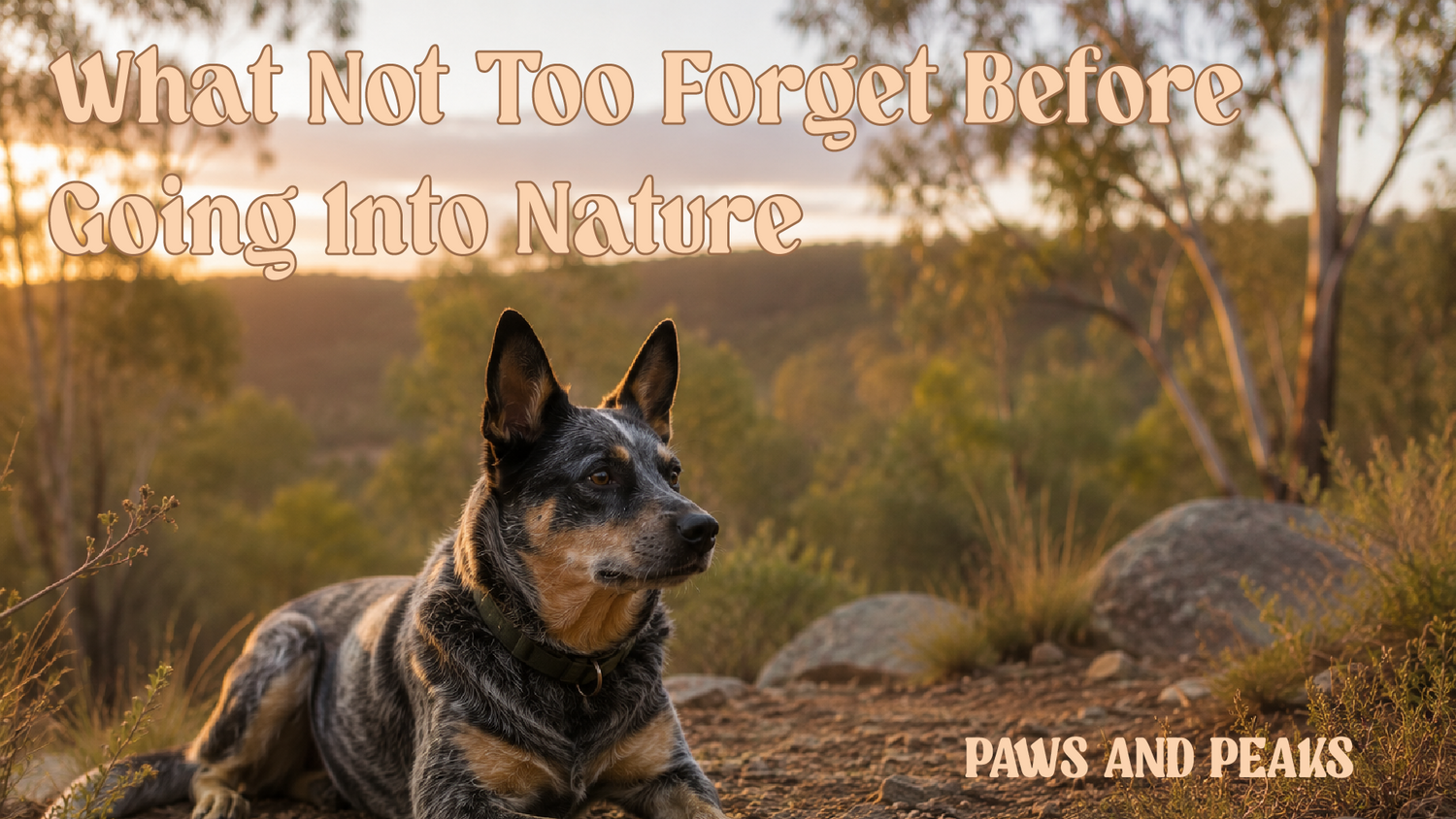
After years of working as a vet nurse and spending countless hours exploring trails, beaches, and campgrounds with Flick, I’ve learned something important about the responsibilities of dog owners:
Most issues outdoors don’t come from dramatic emergencies.
They come from small things people forget.
Not because they don’t care.
Not because they aren’t responsible.
Simply because heading into nature creates a shift in environment, rhythm, and expectation. When you step outside the familiar, you start relying on instincts that are not always set up for outdoor realities, and this is where the responsibilities of dog owners quietly become more important.
This blog breaks down the most common things dog owners forget before heading into nature, why they matter, and how simple changes can prevent unnecessary stress for both you and your dog.
The goal is not perfection.
The goal is awareness.
A little preparation goes a very long way.
The Most Common Things Owners Forget
Through clinic work, personal experience, and watching owners on trails, I see the same patterns over and over again.
Let’s start with the big omissions.
1. Water (For Both You and Your Dog)
This is number one because it is forgotten the most.
Dogs rarely stop to drink on their own during stimulating activities.
And what people often don’t realise is:
1. Dogs dehydrate faster than humans
2. Heat stress begins earlier than you expect
3. Many dogs will continue exploring even when tired or thirsty
4. Creek water and stagnant pools are not safe sources
When heading into nature, water is not optional.
It is essential, and meeting basic hydration is one of the core responsibilities of dog owners.
What to pack
1. Enough water for the entire outing
2. A collapsible bowl
3. Extra water stored in the car for the return
I never underestimate how much Flick will drink, especially on warm days.
It is one of the simplest, most protective things you can bring.
Curious about how to care for your dog on nature excursions? Discover helpful advice in dog care tips for keeping your dog healthy and happy outdoors.
2. Paw Protection and Awareness
Most outdoor injuries I see start at the paws.
People often forget that surfaces change quickly outdoors:
1. Hot sand
2. Sharp shells
3. Rocky climbs
4. Burrs and grass seeds
5. Slippery creek edges
6. Jagged sticks hidden under leaves
Dogs do not always show discomfort immediately, especially if they’re excited.
What to check
1. Paw pads before and after the walk
2. Nails long enough to catch on rocks
3. Any limping, hesitation, or licking
4. Stuck seeds between toes
A quick post walk paw check saves owners a lot of trouble later.
It is one of the easiest habits to build and a simple part of daily dog maintenance.
3. A Basic First Aid Kit
This is the item everyone forgets until they need it.
And by then, the situation is already stressful.
Most outdoor first aid needs are simple:
1. Rinse a small cut
2. Remove a seed
3. Clean a scrape
4. Wrap a paw
5. Stop minor bleeding
6. Support until you reach a vet
These are easy if you have the basics.
They become complicated when you don’t.
What to pack
1. Saline
2. Gauze and non stick pads
3. Vet wrap
4. Small scissors
5. Tweezers
6. Dog safe wipes
Flick has had her fair share of seeds stuck in her paws from narrow tracks. Every time, I’m grateful I carry saline and tweezers so I can help her immediately rather than leaving it to worsen. Being prepared like this reflects the quiet but real responsibilities of dog owners.
4. Identification
This one surprises people.
But I see it constantly.
Owners leave home with:
1. A dog wearing a collar but no tag
2. A tag that’s scratched unreadable
3. A harness without identification
4. A loose lead clip or buckle
If your dog gets startled, slips a lead, or chases wildlife, identification is the only thing that brings them back quickly.
What to check
• Tag readable and firmly attached
• Details up to date
• Collar or harness fitted properly
• Lead clips secure
You do not notice identification until you need it.
By then, it’s too late, and ensuring it’s correct is a basic responsibility of a dog owner.
Planning to take your dog camping but unsure how weather affects their safety? Discover how weather changes affect dogs on camping trips to keep your pup comfortable and healthy in all conditions.
5. Weather Awareness
Most people check the weather for themselves.
Not for their dog.
But dogs experience temperature differently.
What people often forget:
1. Pavement and sand heat much faster than air temperature
2. Humidity affects dogs heavily
3. Cold water at beaches or creeks can cause shock if the dog is overheated
4. Wind can disturb sensitive dogs
5. Shade disappears faster than you expect
With Flick, I always check:
1. Ground temperature
2. Shade availability
3. How far the wind carries smells and sounds
4. Whether the track exposes her to direct sun for long stretches
You do not need to overthink it.
Just pause and evaluate the environment from your dog’s perspective because understanding their dog needs is central to the responsibilities of dog ownership.
6. Recovery Time
This one is rarely talked about, but it matters.
A dog can seem fine during the adventure and show stiffness later.
Owners often forget that dogs push through discomfort in stimulating environments.
What to monitor
1. Slower movement that evening
2. Hesitation when jumping into the car
3. Licking at joints
4. Sudden quietness
5. Stiffness the next morning
Recovery is part of adventure.
Supporting both is responsible care.
7. Boundaries and Training Basics
It’s surprising how many owners forget the most fundamental thing:
Your dog’s behaviour changes in new environments.
Even if your dog has perfect recall at home, the outdoors introduces new distractions that can override trained behaviours.
What owners forget
1. To refresh recall cues before going off lead
2. To set clear expectations early in the walk
3. To guide their dog around other trail users
4. To anticipate wildlife
5. To keep the lead on in risky areas
With Flick, even though she’s incredibly responsive, I assess the environment before letting her explore freely.
Bonded dogs still have instincts.
Responsible owners still assess risk.
8. Breaks
Dogs rarely stop for themselves.
They rely on us.
Owners forget that dogs can:
1. Overheat
2. Overexert
3. Become mentally overstimulated
4. Push through fatigue
What to do
1. Stop every 20 to 30 minutes on warm days
2. Offer water even if they don’t ask
3. Slow the pace if your dog is panting heavily
4. Notice when excitement becomes exhaustion
Breaks protect both body and mind, something every thoughtful dog parent learns through experience and intentional pet parenting.
9. The Return Trip
Most owners prepare for the adventure, but not the trip back.
They forget:
1. Towel for muddy or wet dogs
2. Extra water for rehydration
3. Cooling rest time before jumping into the car
4. A leash they trust for car park movement
5. A plan for managing post walk fatigue
The return is part of the adventure.
Preparing for it makes the entire experience smoother and reflects the lived responsibilities of dog owners.
Curious how outdoor activities can improve your connection with your dog? Explore how to strengthen bonding with your dog to deepen your connection while exploring together.
Why These Things are Forgotten
Understanding why these things slip through helps you prevent it.
1. Lack of routine
If you don’t have a repeatable structure, you rely on memory.
Memory outdoors is unreliable.
2. Overconfidence
“My dog will be fine” is a phrase that causes more emergencies than anything else.
3. Distraction
Excitement, plans, time pressure.
Simple things get missed.
4. Inexperience
You don’t know what you don’t know until you’ve been caught unprepared.
5. Misreading your dog
Owners often assume if their dog isn’t showing distress, everything is okay.
Preparedness is not about fear.
It is about removing unnecessary pressure later.
A Real Morning With Flick
A few months ago, Flick and I went on a short early morning walk. Quiet track. Cool air. Nothing complicated.
Halfway through, she paused and lifted one paw briefly.
Nothing dramatic.
Just a slight change.
I checked immediately and found a tiny burr wedged between her toes. Easy to remove, no stress for her, and we continued.
If I hadn’t noticed, she likely would have kept walking, and that small burr could have caused swelling or infection later.
This moment is the entire message of this blog.
Most risks are small.
Most solutions are simple.
Most problems grow because something minor was forgotten; and awareness is part of the everyday responsibilities of dog owners.
A Practical Pre-Adventure Checklist
Here is a checklist I use before every outdoor experience with Flick.
Keep it simple. Keep it consistent.
1. Dog essentials
• Secure, well-fitted collar or harness
• Readable ID tag
• Lead in good condition
• Quick behaviour check (energy level, mobility, recent issues)
2. Environmental checks
• Weather suitable
• Ground temperature safe
• Trail or route appropriate for fitness and confidence
• Awareness of wildlife or hazards in the area
3. Packed items
• Water
• Collapsible bowl
• Basic first aid items
• Treats
• Poo bags
• Charged phone
• Towel left in the car
4. Mindset
• Allow enough time
• Start slowly
• Stay aware
• Follow your dog’s cues
• Adjust without hesitation
When you do this regularly, it takes under five minutes.
Planning to take your dog into nature but unsure how to keep them active safely? Discover practical tips in dog exercise guide to maintain your dog’s fitness and well-being on outdoor trips.
Bringing It All Together
Dog owners often forget the simple things before heading into nature: water, first aid, identification, behaviour expectations, gear checks, environmental awareness, and recovery needs.
None of these things require extra skill or training.
They require attention.
That’s it.
And when you give those details the attention they deserve, every outdoor experience becomes safer, smoother, and more enjoyable for both you and your dog.
Flick has shown me that responsible preparation isn’t about restricting adventure.
It is what allows adventure to feel relaxed, grounded, and genuinely memorable, and that is ultimately what the true responsibilities of dog owners are about.
