
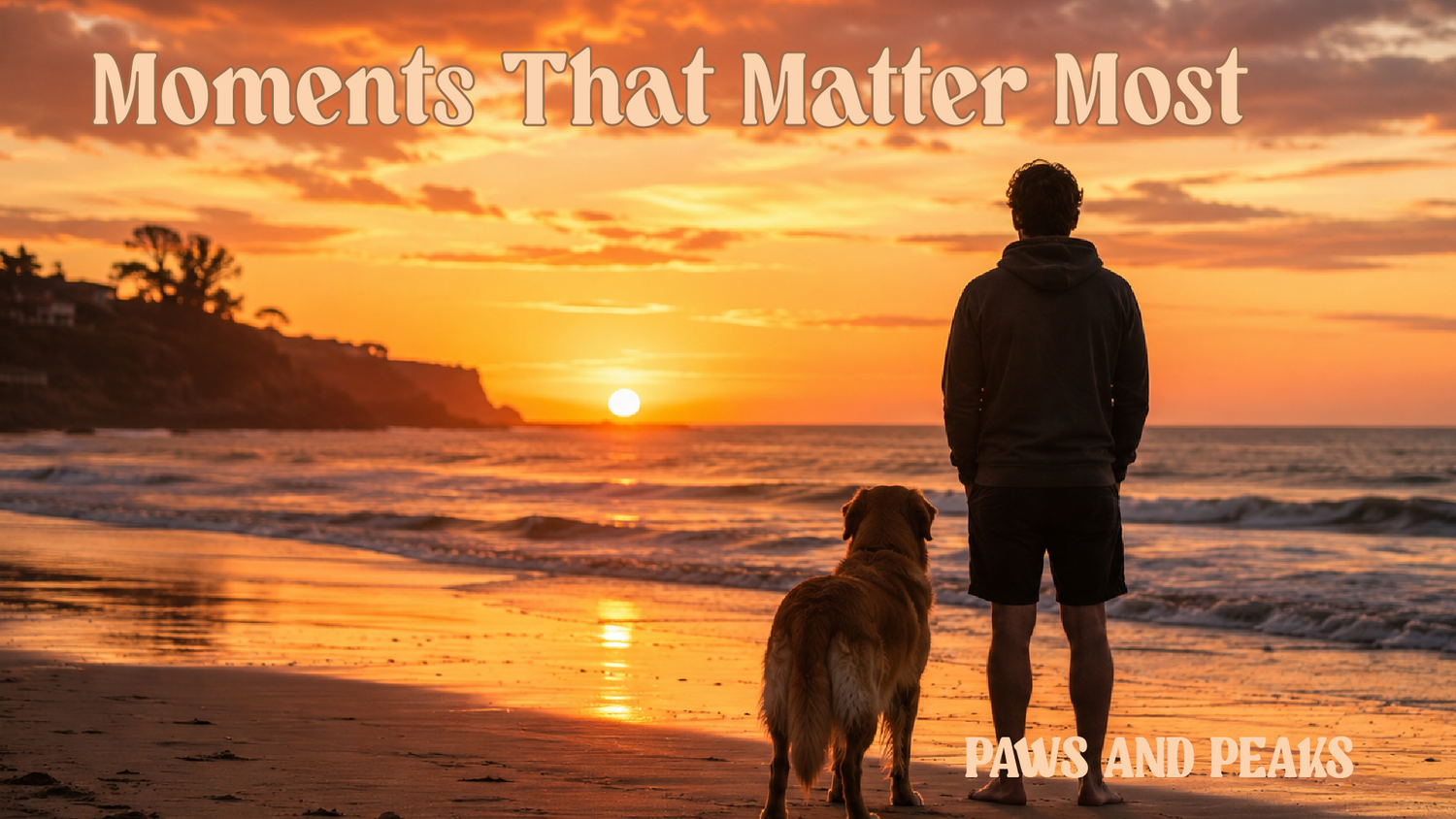
Dog care tips begin long before an emergency ever happens.
Working as a vet nurse changes the way you see dogs.
You stop seeing emergencies as isolated events and start seeing patterns.
You start to recognise the moments that matter most — the quiet ones, the early cues, the nearly invisible signals dogs give us before anything becomes serious.
And when you spend enough time outdoors with your own dog, those lessons become even clearer.
For me, George taught me as much as the clinic ever did.
Not through dramatic situations or big turning points, but through everyday experiences that revealed what dogs really need from us.
In this blog, I want to share the lessons that have shaped how I care for dogs, inside and outside the clinic. These dog care tips come from real moments, not theory.
These are the insights I wish every owner understood.
Not complicated, not clinical — just practical, grounded, and real.
Lesson 1: Dogs Tell us Everything, Long Before it Becomes a Problem
One of the first things you learn in the clinic is that dogs rarely hide discomfort completely.
They show it—softly, subtly, and consistently.
Most owners overlook the early signals because they seem small or easy to dismiss, even though recognising them is part of how to take care of a pet dog properly.
Common early cues:
1. Slowing down slightly
2. Pausing in a way that feels “off”
3. Licking at a paw briefly
4. A tiny change in posture
5. Hesitation jumping into the car
6. A glance back at you that isn’t typical
7. Choosing a different path or surface
These cues appear long before limping, swelling, or more obvious discomfort.
George used to show these tiny cues on hikes.
A small shift in how he placed one paw was enough for me to pause and check him. Most of the time, it was something simple — a seed, a small scrape, a moment of overextension.
Catching things early is one of the most protective dog care tips you can build as a dog owner.
Want to enjoy deeper connection with your dog while traveling? Discover helpful tips for strengthening bonding with your dog to enhance companionship and happiness.
Lesson 2: Calm Handling Changes Everything
A dog takes emotional direction from the person holding the lead.
Your calmness is not optional — it is a tool.
When something unexpected happens, dogs notice:
1. Your breathing
2. Your posture
3. Your tone
4. Your pace
They interpret it instantly.
In emergencies, the calmest person in the room is the most effective.
And that applies outdoors too.
If George stumbled or got startled, the first thing I’d do was slow my movement and soften my voice. That steady energy keeps the dog from escalating their own stress.
Calmness does not mean you aren’t worried.
It means you’re choosing the response your dog needs — something every dog health care tips guide should emphasise more clearly.
Lesson 3: Preparedness Reduces Panic, Not Possibility
Preparedness is often misunderstood as “expecting something to go wrong.”
It’s not.
Preparedness is simply creating a buffer between problem and panic.
It doesn’t stop accidents.
It stops chaos.
When you’re prepared, you:
1. Respond faster
2. Make clearer decisions
3. Avoid compounding the issue
4. Prevent small injuries from becoming big ones
5. Protect your dog’s emotional experience
Carrying basic first aid outdoors isn’t dramatic.
It’s compassionate.
It gives you the ability to support your dog immediately instead of feeling helpless.
Some of the worst outcomes I’ve seen in the clinic started as minor issues that weren’t managed early simply because an owner didn’t have the right supplies with them.
Preparedness is not overthinking.
It is responsible care — and part of the true responsibility of owning a dog.
Lesson 4: Most Outdoor Risks are Small, But They Add Up
People imagine emergencies outdoors as snake bites or major injuries.
But the reality is far quieter.
Most outdoor risks look like this:
1. Seeds
2. Small cuts
3. Heat stress starting slowly
4. Sore joints
5. Dehydration
6. Overexertion
7. Minor scrapes
8. Rough terrain
Individually, they are manageable.
Together, they can derail your dog’s comfort if you don’t notice them early enough.
George, for example, was incredibly steady on most terrain. But on hot days, even a short walk could become taxing if the ground temperature rose quickly. Recognising this early kept him safe long before problems developed.
Being outdoors is not dangerous — being unaware is.
Awareness like this is one of the most overlooked dog care tips I share with owners.
Lesson 5: Dogs Depend on Routine More Than we Realise
A predictable process helps dogs relax.
It builds trust and reduces uncertainty.
Every adventure with George followed the same baseline routine:
1. Harness check
2. ID check
3. Slow start
4. Consistent pace
5. Water breaks
6. Quick touch point checks
7. Calm finish
This predictability helps dogs regulate their arousal and energy, especially in stimulating environments like beaches or bush tracks.
Dogs thrive on small rituals, not rigid rules.
Rituals give them stability and answer a fundamental question many owners forget to ask: what does a dog need to live well, not just exist.
Wondering how to make your vacation safe and enjoyable for your dog? Discover key insights into the responsibilities of dog owner to stay responsible and prepared.
Lesson 6: Slowing Down Helps You See More
The best diagnostic tool outdoors is not equipment—it's observation.
Slowing down helps you notice:
1. How your dog is moving
2. How they’re responding to the environment
3. Whether they’re overheating
4. Whether they’re favouring one side
5. Subtle changes in their breathing
6. Moments when they’re unsure
On one walk, George paused near a rocky surface and lifted his paw for just a second. It was enough for me to check and find a small shard of bark.
If we had been rushing, I would have missed it.
Slowing down is not just for your dog.
It’s for you.
It gives you space to interpret the situation instead of reacting to it.
Among all the dog care tips I’ve learned, this one has probably prevented the most problems.
Lesson 7: Small Interventions Make Big Differences
Most of the time, dog owners imagine first aid as something complicated.
But in the clinic, I see the opposite.
Small interventions preserve comfort, prevent infection, and reduce stress.
Examples of small but impactful actions:
1. Rinsing a small wound early
2. Removing a grass seed before it burrows
3. Offering water before dehydration sets in
4. Stopping the walk before fatigue hits
5. Protecting a damaged paw with a quick wrap
6. Cooling a dog down gently before symptoms worsen
These actions do not require advanced knowledge.
They require awareness and willingness to act early.
Small, timely support is one of the biggest gifts you can give your dog — and one of the most practical dog care tips you will ever use.
Lesson 8: Trust is Built Through Micro Moments
The strongest bond between a dog and their person is not built in dramatic circumstances.
It’s built in micro moments:
1. The way you respond when they hesitate
2. The softness in your voice during stress
3. The choice to pause when they need space
4. The way you read their cues
5. The reliability of your routines
6. The stability of your reactions
Every small moment teaches your dog whether you are someone they can rely on.
George always checked in with me on trails. Not because he was unsure, but because he trusted I was paying attention.
That trust came from years of consistent handling, calm responses, and early support when he needed it.
This is one of the most important lessons I wish every owner understood:
Trust is built long before you ever need it.
Lesson 9: Confidence Comes From Knowledge, Not Luck
I’ve seen many owners hope their dog will be “fine” outdoors.
Hope is not a strategy.
Knowledge is.
Confidence doesn’t come from the absence of problems.
It comes from knowing how to respond when something unexpected happens.
Knowledge gives you:
1. Steady decision making
2. Early detection of issues
3. The ability to prevent escalation
4. Calm energy your dog can follow
5. Practical skills you can rely on
No one becomes confident overnight.
You build it through experience, intention, and preparation.
Lesson 10: The Moments That Matter Most Are Often the Smallest
After all the emergencies, all the training, all the long days in the clinic, the moments that stay with me the most are the smallest ones.
Moments when a dog:
1. Leans into your support
2. Trusts you to guide them
3. Looks back for confirmation
4. Slows their pace to match yours
5. Chooses connection over distraction
With George, these moments showed up quietly.
A small pause at a fork in the track.
A gentle step closer when the environment changed.
A shift in energy that said, I’m with you.
These are the moments that matter.
They tell you everything about the relationship you’re building.
Looking to make extended outdoor trips fun and safe for your dog? Explore tips for multi-day adventures with dogs for planning successful multi-day journeys.
Bringing It All Together
Being a vet nurse has taught me that caring for dogs is not about big gestures or dramatic heroics.
It’s about consistency. Awareness. Preparedness. Calmness.
And knowing how to support your dog before a situation ever becomes serious.
The lessons that matter most are simple:
1. Dogs communicate early
2. Calm handling changes outcomes
3. Preparedness prevents panic
4. Small risks add up
5. Routine builds trust
6. Slowing down reveals everything
7. Small interventions make big differences
8. Trust is built in micro moments
9. Knowledge creates true confidence
10. Connection grows through repeated care
These dog care tips are not complex. They are repeatable, steady practices that shape lifelong wellbeing.
You do not need to be perfect.
You simply need to be present, prepared, and willing to learn from your dog.
George taught me that the most meaningful parts of caring for a dog are often subtle.
And those subtle moments are exactly what make every walk, every adventure, and every shared experience worth it.
