
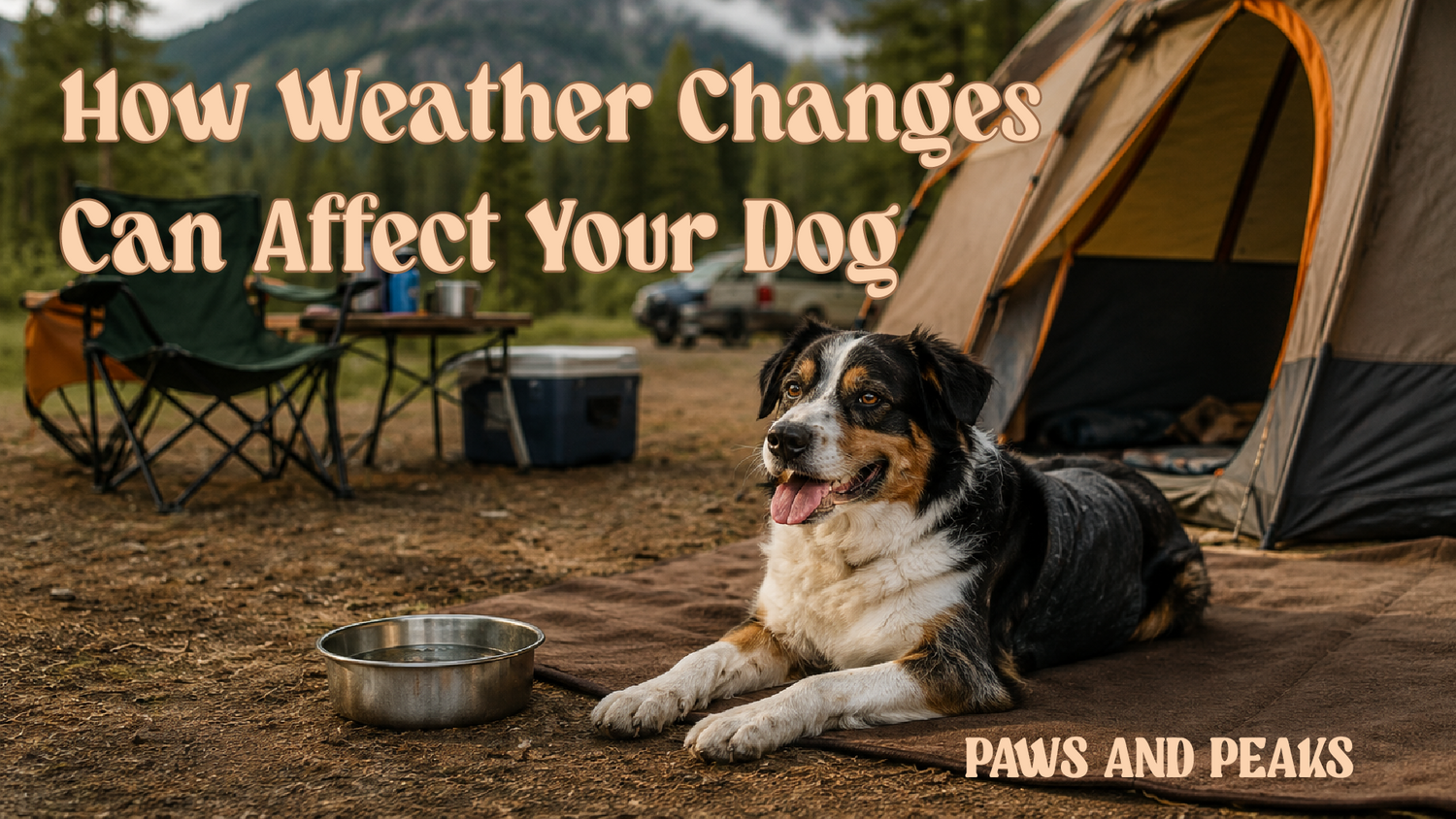
Dog travelling requires awareness beyond gear, packing, and logistics. Weather often gets overlooked, but it’s one of the biggest factors shaping your dog’s comfort, safety, and enjoyment outdoors.
When people talk about camping with dogs, the focus often lands on gear, packing lists, and logistics. What food to bring. What equipment to carry. How far to walk.
Weather usually gets reduced to a quick check of the forecast.
But in my experience as a vet nurse and as someone who spends a lot of time outdoors with dogs, camping weather is one of the most important factors shaping how safe, comfortable, and connected your adventure actually is.
Dogs don’t experience weather the way we do. They feel it through their bodies, the ground beneath them, the air they breathe, and the way their environment shifts around them. A change that feels minor to us can feel significant to them, especially over the course of a day or a multi-day trip. Monitoring dog symptoms can help detect early signs of discomfort.
This blog is not about controlling the weather or planning every variable. It’s about understanding how weather affects dogs on camping trips, recognising the signals they give us, and responding early so outdoor adventures stay positive and safe.
Why Weather Matters More to Dogs Than We Realise?
Indoors, temperature is regulated. Surfaces are predictable. Shelter is constant.
Outdoors, everything changes.
Dogs regulate their body temperature primarily through panting and limited sweat glands in their paw pads. They are closer to the ground, more exposed to wind, heat, cold, and moisture, and they rely on us to notice when conditions are becoming uncomfortable or unsafe.
Several factors influence how strongly weather affects a dog:
1. Coat type and thickness
2. Body size and age
3. Breed characteristics, especially flat-faced breeds
4. Fitness and conditioning
5. Access to shade, water, and rest
Because dogs can’t tell us they are struggling, changes in behaviour are often the first and most important clues. Maintaining calm for dogs helps them cope with sudden shifts.
Want to protect your dog from unpredictable weather on trips? Explore essential tips in responsibilities of dog owners for responsible care in all conditions.
Heat: When the Environment Becomes a Risk
Heat is one of the most common challenges dogs face while camping, and one of the easiest to underestimate.
For most of you asking, ‘how does heat affect dogs?’
A warm day can feel manageable to us while being genuinely dangerous for a dog. Direct sun, hot ground, limited airflow, and excitement can combine quickly.
Dogs will often keep going simply because they are with you. That willingness can mask early warning signs if you’re not paying attention, especially for hot weather dogs.
Early signs heat is affecting your dog
1. Heavy panting that doesn’t settle with rest
2. Excessive drooling
3. Slowing down or stopping during walks
4. Seeking shade or lying down frequently
More serious signs
1. Vomiting or diarrhoea
2. Disorientation or wobbling
3. Bright red or pale gums
4. Collapse or refusal to move
The most important thing to understand about heat stress is how quickly it can escalate. If something feels off, it usually is.
Supporting your dog while camping in hot weather often means adjusting expectations rather than pushing through. That can look like:
That can look like:
1. Choosing shaded campsites over scenic ones
2. Planning walks early in the morning or late in the afternoon
3. Offering small amounts of water often
4. Avoiding hot sand, rocks, and dark surfaces
5. Building long rest periods into the day
A slower pace doesn’t take away from the adventure. It protects it. Dog travelling safely means anticipating these conditions.
Cold Weather and Overnight Temperature Drops
Cold often surprises people more than heat, especially overnight.
Even dogs that cope well in cool conditions can struggle when temperatures drop after sunset. Cold ground, wind exposure, and damp bedding can lead to poor sleep, stiffness, and discomfort the following day.
Dogs most affected by cold include:
1. Short-haired dogs
2. Small dogs
3. Senior dogs
4. Dogs recovering from injury
Signs your dog is feeling the cold:
1. Shivering or trembling
2. Curling tightly into a ball
3. Seeking constant body contact
4. Reluctance to leave the tent in the morning
5. Stiff movement that improves once warmed up
Supporting your dog while camping in cold weather is less about doing more and more about setting things up well.
That includes:
1. Insulating them from the ground with a mat or thick bedding
2. Keeping bedding completely dry
3. Adding an extra layer if needed
4. Positioning sleeping areas away from direct wind
5. Allowing gentle movement in the morning before longer activity
Rest and recovery matter more on multi-day trips than most people realise. Dog travelling safely means accounting for overnight conditions.
Planning to keep your dog active while camping despite changing weather? Discover helpful tips in dog exercise guide to maintain their fitness and well-being.
Wind: The Quiet Stressor
Wind is often overlooked, but it can have a significant impact on how dogs feel at camp.
Wind carries scents differently, masks sounds, and causes constant movement in the environment. For some dogs, this creates heightened alertness or anxiety, particularly in unfamiliar locations.
You might notice:
1. Increased scanning or staring into the distance
2. Barking at sounds you can’t identify
3. Difficulty settling
4. Clinginess or restlessness
Reducing wind-related stress is about creating predictability.
Simple adjustments help:
1. Choosing campsites with natural windbreaks
2. Positioning your tent to shield your dog’s resting area
3. Keeping routines consistent
4. Offering calm activities like sniffing or slow exploration
5. Reducing high-energy play when conditions are blustery
Wind doesn’t need to ruin a trip. It just needs to be acknowledged.
Humidity and Rain on Camping Trips
Humidity makes cooling harder for dogs, even when temperatures aren’t extreme. Panting becomes less effective, fatigue sets in sooner, and hydration needs increase.
Rain adds another layer of challenge.
Wet conditions can lead to:
1. Damp bedding
2. Skin irritation
3. Paw issues
4. Chills when combined with wind
Managing wet weather is less about continuing plans and more about maintaining comfort.
Helpful habits include:
1. Drying your dog thoroughly after wet walks
2. Checking between toes for redness or debris
3. Keeping a towel specifically for your dog
4. Airing out bedding whenever possible
5. Monitoring appetite and water intake
Comfort is not optional. It’s foundational. Responsibility of a dog owner includes preparing for these situations.
Storms and Sudden Weather Changes
Some dogs are sensitive to pressure changes that occur before storms. You may notice restlessness, pacing, or clinginess before you hear thunder.
When weather shifts suddenly, dogs often look to us for cues.
Supporting them can be as simple as:
1. Creating a secure sleeping space
2. Keeping them close and supervised
3. Using a calm, steady voice
4. Maintaining routine as much as possible
Predictability helps dogs feel safe when the environment feels uncertain.
Looking for ways to protect your dog from heat, cold, or storms while traveling? Discover essential strategies in dog care on vacation to maintain their well-being throughout your trip.
Responding Early Makes All the Difference
One of the biggest lessons weather teaches us outdoors is the value of early response.
When you notice:
1. Changes in pace
2. Changes in behaviour
3. Changes in appetite or energy
and respond calmly and early, you prevent small issues from becoming big ones.
Weather-aware camping is not about perfection. It’s about attention.
A Simple Weather-Aware Rhythm at Camp
Rather than rigid schedules, a flexible rhythm helps dogs cope with changing conditions.
1. Morning
Short movement before temperatures rise. Hydration check. Shade set early.
2. Midday
Rest-focused period. Minimal activity. Frequent water.
3. Afternoon
Gentle exploration if conditions allow. Watch fatigue closely.
4. Evening
Dry, warm sleeping setup. Calm routine before bed.
Dogs thrive when they know what comes next.
What Camping Weather Teaches Us About Our Dogs?
Weather strips things back.
It shows us:
1. How resilient our dogs are
2. Where they need more support
3. How well we read their signals
4. How willing we are to adapt
Camping doesn’t need perfect conditions to be meaningful. It needs awareness, flexibility, and respect for how dogs experience the world.
When you listen to what the weather is telling you through your dog, you don’t just keep them safe. You build trust.
Bringing It All Together
Weather will always be part of outdoor adventure.
Understanding how weather affects dogs on camping trips allows you to:
1. Adjust plans without guilt
2. Protect your dog’s wellbeing
3. Create safer, calmer experiences
4. Strengthen trust through responsiveness
You don’t need to predict everything.
You just need to pay attention.
And more often than not, your dog will tell you exactly what they need long before things go wrong.
