
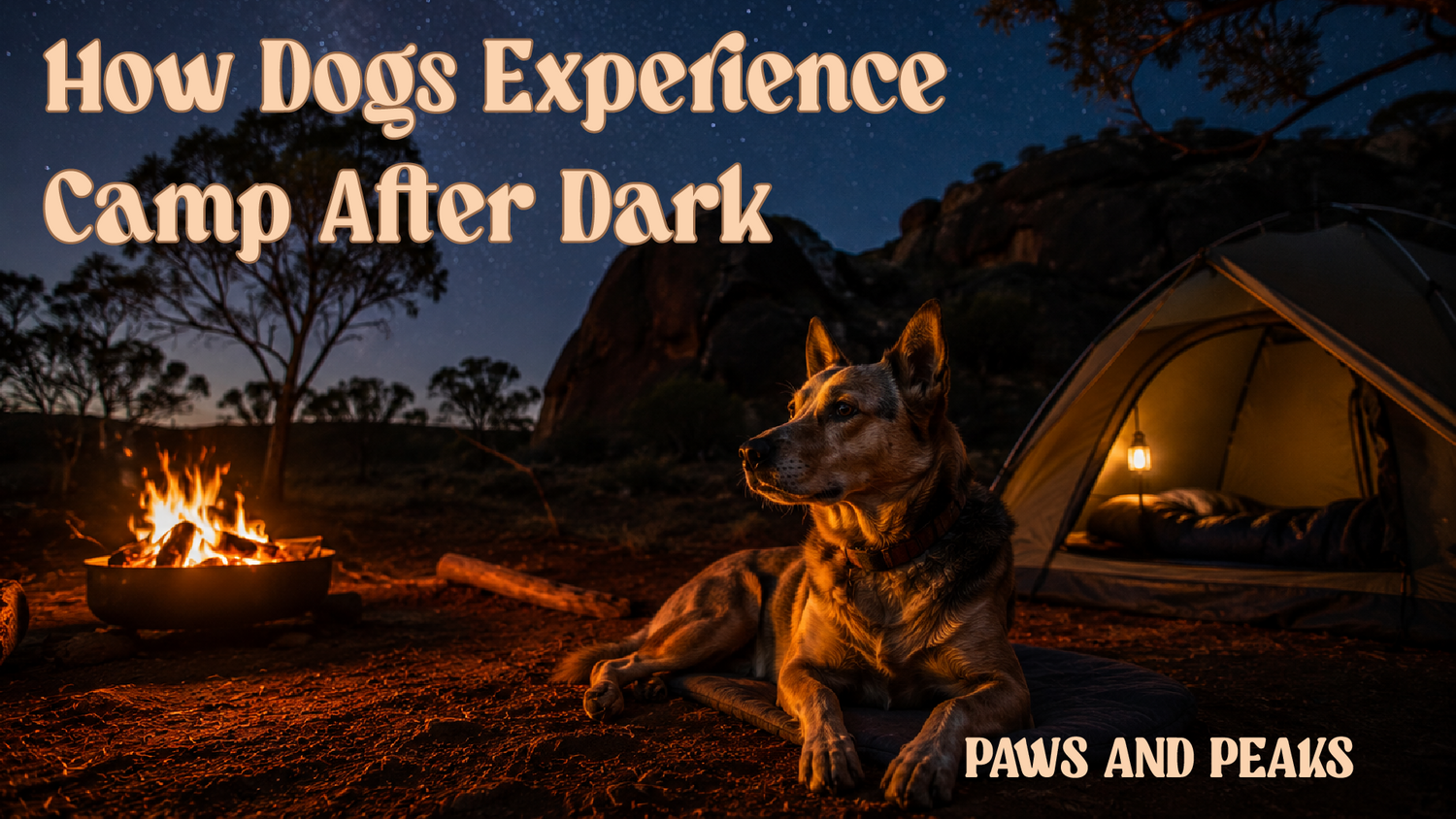
Outdoor dog adventures at night change everything when you’re camping.
The campsite that felt open and familiar during the day becomes quieter, darker, and more alive in ways we don’t always notice. Sounds carry further. Smells shift. Movement happens beyond what we can see.
For dogs, this change is significant.
While we rely heavily on sight, dogs rely on scent and sound. When daylight fades, their world doesn’t shrink. It expands. And that’s often why dogs behave differently at camp once the sun goes down.
In this blog, I want to explore how dogs experience night time outdoors, why their behaviour can change after dark, and how understanding this helps create calmer, safer nights when camping together.
Why Night Feels Different for Dogs?
During the day, visual information helps dogs make sense of their environment. They can see people approaching, wildlife at a distance, and changes in terrain.
At night, that visual clarity disappears.
What replaces it is heightened sensory input.
Dogs become more aware of:
1. Sounds that were masked during the day
2. Scents that travel differently in cooler air
3. Subtle movement in the environment
4. Wildlife activity that increases after sunset
This doesn’t mean your dog is anxious or misbehaving. It means their instincts are switched on.
Nighttime camping with dogs turns them into observers and guardians, even those who are relaxed and easygoing during the day. On adventures with dogs, this heightened awareness is simply part of how they experience the outdoors after dark.
Want to make sure your dog stays safe during evening explorations? Explore dog care tips for guidance on keeping your pup relaxed and happy at night.
Common Behaviour Changes After Dark
During outdoor dog adventures, it’s very normal for your dog to act differently at camp once night falls.
You might notice:
1. Increased alertness or scanning into the darkness
2. Barking at sounds you can’t identify
3. Difficulty settling or pacing
4. Staying closer to you than usual
5. Hesitation when toileting away from camp
These behaviours aren’t signs of poor training. They’re signs that your dog is processing a lot more information than you are.
Understanding this helps you respond with calm support rather than frustration.
Nighttime Through a Dog’s Perspective
At night, dogs experience the outdoors as a living system rather than a static space.
1. Every rustle could be an animal moving.
2. Every unfamiliar scent could signal change.
3. Every distant sound could be something approaching or leaving.
While humans often dismiss these details, dogs take them seriously.
What feels peaceful to us can feel busy to them.
When we recognise that difference, we stop expecting night time behaviour to mirror daytime behaviour, and that shift alone makes camping easier.
Why Some Dogs Bark More at Night
Barking at night is one of the most common concerns people have during outdoor dog adventures.
In many cases, barking is not fear-based. It’s communication.
Dogs bark at night to:
1. Alert you to changes in their environment
2. Express uncertainty
3. Release built-up alertness
4. Check in when they’re unsure
How you respond matters more than whether barking happens at all.
If every bark triggers big reactions, tension rises.
If barking is acknowledged calmly and then redirected, dogs often settle more easily.
Looking for ways to manage your dog’s needs on longer outdoor excursions? Discover helpful guidance in multi-day adventures with dogs for extended adventures.
Helping Your Dog Feel Secure After Dark
Security at night comes from predictability.
Your dog doesn’t need silence or control. They need to know what happens next.
Supportive night time habits include:
1. A consistent bedtime routine
2. A familiar sleeping setup
3. Calm, steady responses to noise
4. Staying close if your dog seeks reassurance
Many dogs settle better when they sleep inside the tent with you. Shared space reduces uncertainty and helps regulate their nervous system. These small adjustments are often overlooked in dog travel tips, yet they make a significant difference during outdoor dog adventures.
Creating a Calm Night time Routine at Camp
A simple, repeatable routine helps your dog transition from day to night.
A calm evening rhythm might look like this:
1. Before sunset
A short, relaxed walk near camp. No rushing. No big stimulation.
2. As light fades
Water offered. Food finished earlier rather than right before sleep.
3. Before bed
A final toilet break in the same area each night. Calm praise. Minimal talking.
4. Inside the tent
Your dog’s bedding in a familiar spot. Reduced movement. Soft, steady energy.
Routine doesn’t remove alertness, but it gives your dog something stable to anchor to.
Light, Shadows, and Sensory Overload
Lighting plays a bigger role at night than many people realise.
Some dogs struggle with:
1. Flickering firelight
2. Sharp shadows near tents
3. Sudden torch beams
Others feel more unsettled in complete darkness.
Pay attention to what helps your dog relax.
For some, a soft, consistent light near the tent entrance reduces uncertainty.
For others, darkness with your presence is more calming.
There’s no universal rule. Observation is key during outdoor dog adventures.
Planning to make nighttime outdoor adventures more meaningful with your dog? Discover how to strengthen bonding with your dog through outdoor exploration and learn ways to deepen your bond during every outing.
Nighttime Safety Without Creating Tension
Night is when unexpected encounters are more likely.
1. Wildlife moves.
2. Other campers shift around.
3. Dogs may feel compelled to investigate.
Safety measures should feel quiet and normal, not restrictive.
Helpful choices include:
1. Keeping your dog secured at night
2. Using a short lead for toilet breaks
3. Scanning the area before moving away from camp
4. Staying calm and deliberate in your movements
Dogs take emotional cues from us. When we move confidently, they follow.
When Nighttime Feels Challenging
Some nights will be harder than others during outdoor dog adventures.
Wind, weather changes, or unfamiliar environments can increase alertness.
When this happens:
1. Lower expectations
2. Reduce stimulation the next day
3. Prioritise rest and comfort
4. Adjust your plans if needed
A restless night doesn’t mean the trip has failed. It means your dog is adapting. In some cases, simple adjustments like checking your dog's safety gear can also help them feel more secure and comfortable.
What Nighttime Camping Teaches Us About Trust?
Nighttime strips things back.
It shows us:
1. How our dog looks to us for reassurance
2. How clearly we communicate through calm behaviour
3. How trust grows when we respond rather than react
When your dog feels supported at night, it strengthens confidence during the day.
Bringing It All Together
Nighttime in outdoor dog adventures feels different because it is different.
Understanding that allows you to:
1. Respond with patience
2. Adjust routines gently
3. Support natural instincts
4. Create calmer nights at camp
You don’t need to silence every bark or eliminate alertness.
You just need to provide stability.
When dogs know they’re safe, they rest.
When they rest, the adventure continues.
