
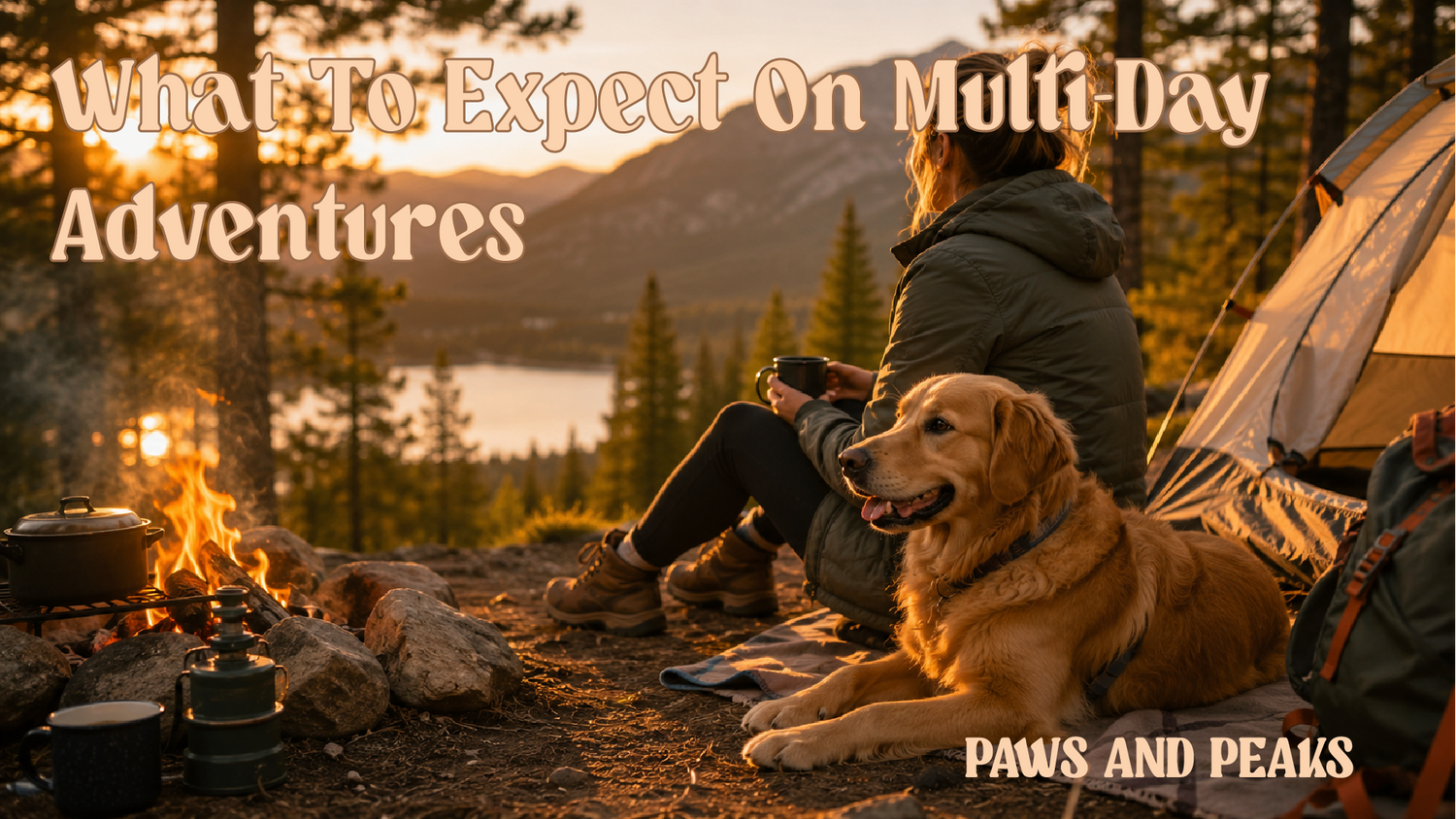
The first day of a camping trip for multi-day adventures with dogs is usually filled with excitement.
New smells. New places. New routines.
Your dog moves with energy and curiosity, often running on adrenaline as much as enthusiasm.
But somewhere after the first night, things begin to shift.
Multi-day adventures with dogs are not just longer versions of day trips. They place different physical and emotional demands on your dog, and those changes often show up quietly rather than dramatically.
In this blog, I want to explore what typically changes for dogs after day one, how to recognise those shifts early, and how responding with awareness helps create safer, more enjoyable multi-day adventures together.
Why Day Two Feels Different for Dogs?
Day one of dog adventures is full of stimulation.
Dogs are processing new environments, scents, sounds, and routines all at once. Even calm, well-adjusted dogs often run on excitement initially.
By day two, that stimulation catches up.
Sleep may have been lighter than usual. Muscles have worked harder than they do at home. Ground surfaces are unfamiliar. Routines are different.
What looks like a change in behaviour is often simply fatigue.
Understanding this as a dog parent helps you support your dog rather than misinterpret their signals.
Energy Levels Become More Honest
On the first day, many dogs push themselves.
They walk further. Stay alert longer. Move faster than usual.
By the second or third day, energy becomes more realistic.
You may notice:
1. Slower starts in the morning
2. More frequent pauses
3. Choosing rest over exploration
4. Less interest in long distances
This is not a problem. It’s information.
Multi-day adventures with dogs require pacing, not performance.
Not sure how to plan your first outing properly? Explore practical advice in planning your first dog adventure before extending your trip.
Sleep and Recovery Matter More Than Distance
Dogs rarely sleep as deeply in new environments during their dog adventure time.
Unfamiliar sounds, scents, and movement often lead to lighter, more fragmented sleep at camp.
Over multiple days, that sleep debt adds up.
Signs your dog needs more recovery:
1. Difficulty settling at night
2. Increased clinginess
3. Irritability or reduced tolerance
4. Slower response to cues
Supporting recovery means:
1. Creating a consistent sleeping setup
2. Insulating from cold or hard ground
3. Keeping nights calm and predictable
4. Allowing quiet mornings without rushing
A well-rested dog copes better with everything else.
Appetite and Hydration can Shift
Food routines often change on multi-day adventures with dogs.
Some dogs eat less due to stimulation or heat. Others eat more due to increased energy use.
You might notice:
1. Skipped meals
2. Eating slowly
3. Drinking more or less than usual
Rather than forcing food, focus on:
1. Offering meals at familiar times
2. Keeping food routines simple
3. Monitoring hydration closely
4. Watching overall energy rather than single meals
Consistent access to water is essential during a dog’s trip, even when appetite fluctuates.
Planning to extend your trip with your dog beyond day one? Discover what truly matters in the responsibilities of dog owners for safe adventures and more joyful experiences together.
Paws and Physical Wear Add Up
What feels fine on day one can become uncomfortable by day three.
Repeated walking on unfamiliar surfaces can cause:
1. Paw pad tenderness
2. Minor abrasions
3. Stiffness or soreness
Daily checks make a difference.
A quick pause each evening to:
1. Inspect paws
2. Remove debris
3. Check for redness
4. Monitor gait
helps prevent small issues from becoming trip-ending problems.
Behavioural Changes Over Multi-Day Adventures with Dogs
Fatigue affects behaviour.
A dog who was relaxed on day one may become:
1. More reactive
2. Less tolerant of other dogs
3. Less responsive to cues
4. More sensitive to noise
This doesn’t mean something is wrong.
It means your dog is tired.
Reducing stimulation, shortening walks, and prioritising rest often resolves these changes quickly during dog travelling.
Adjusting Your Expectations Mid-Trip
One of the most important skills in multi-day adventures is flexibility.
Plans made at home don’t always match what your dog needs after several days outdoors.
Helpful mindset shifts include:
1. Distance is optional
2. Rest days are productive
3. Turning back is a decision, not a failure
4. Calm is more valuable than coverage
Dogs don’t measure success by kilometres walked.
They measure it by how safe and supported they feel.
Creating a Sustainable Daily Rhythm
Rather than pushing the same schedule each day, a sustainable rhythm evolves naturally.
A gentle multi-day rhythm might look like:
1. Morning
Slow start. Gentle movement. Hydration check.
2. Midday
Rest, shade, minimal activity.
3. Afternoon
Shorter, relaxed exploration.
4. Evening
Early wind-down. Consistent sleep routine.
This rhythm supports recovery without removing the sense of adventure.
Want to make sure your dog stays healthy on longer adventures? Learn smart travel care ideas in dog care tips to maintain your dog’s energy and happiness.
What Multi-Day Trips Teach Us About Partnership?
Multi-day adventures reveal a lot about the relationship you have with your dog.
They show:
1. How well you read subtle changes
2. How willing you are to adjust
3. How much trust your dog places in you
When your dog sees you respond to fatigue, discomfort, or uncertainty with calm support, trust deepens.
That trust carries into every future adventure.
Bringing it All Together
Multi-day adventures with dogs are about balance.
They require:
1. Awareness rather than ambition
2. Adjustment rather than rigid planning
3. Listening rather than pushing
When you recognise what changes after day one and respond early, you create experiences that feel supportive rather than exhausting.
The goal isn’t to do more.
It’s to do what works.
And when it works, both you and your dog come home better for it.
