
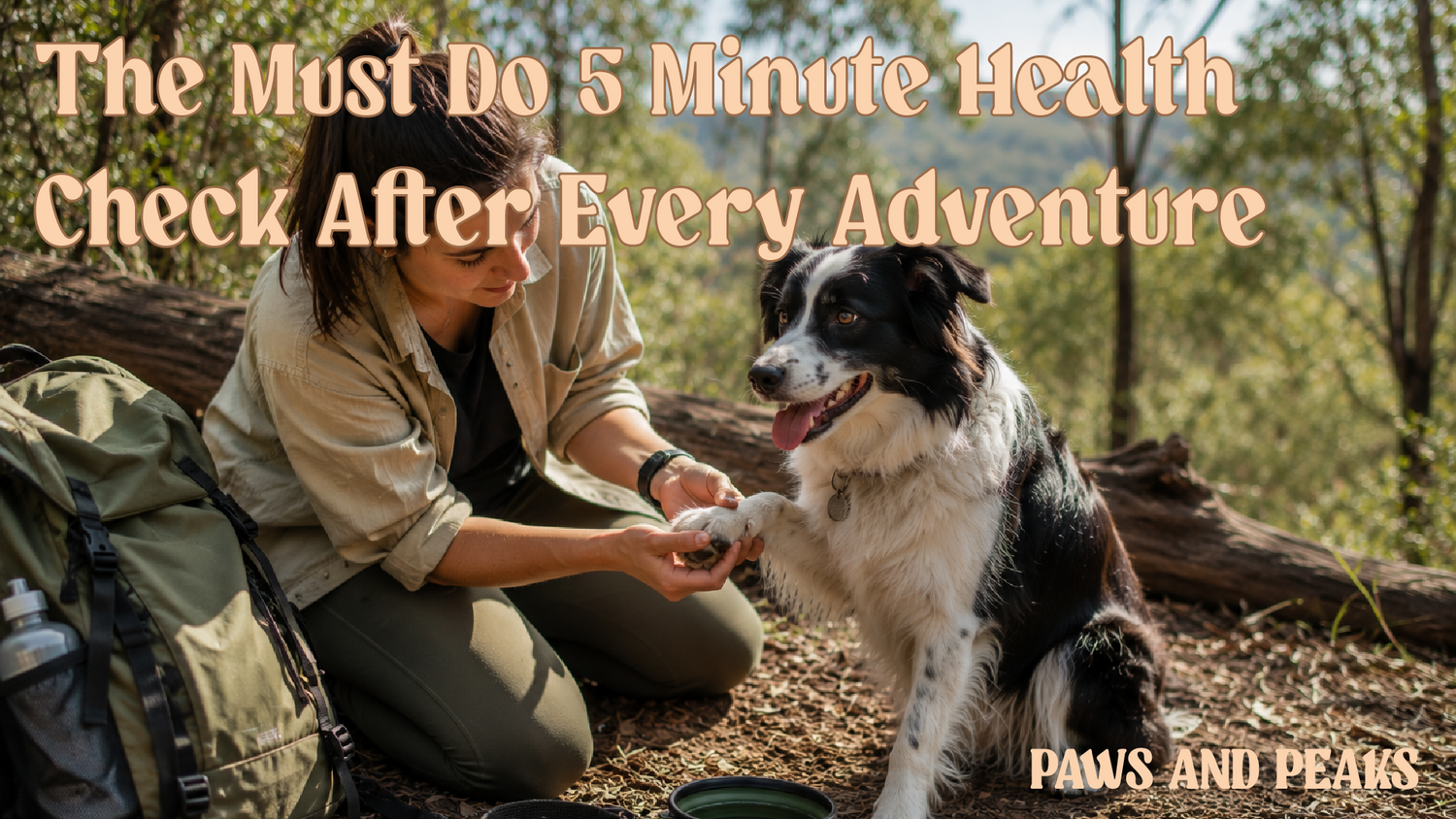
Exploring the outdoors with your dog is one of life's greatest adventures. Whether you've spent the day bushwalking, camping or visiting the beach, taking a few minutes to check your dog before heading home can help identify small problems before they become bigger ones.
Many outdoor injuries aren't immediately obvious. A grass seed caught between the toes, a small cut on a paw pad or an attached tick may go unnoticed until your dog becomes uncomfortable hours later.
The good news is that a simple five-minute health check can make all the difference.
Why A Post-Hike Health Check Matters
Dogs are naturally curious and often push through minor discomfort during an adventure.
By the time they begin limping or showing signs of pain, an injury may already have worsened.
Making a quick health check part of your routine helps you catch problems early and gives you peace of mind after every outing.
1. Check Their Paws
Your dog's paws do a lot of work on the trail.
Look for:
- Cuts or abrasions
- Cracked paw pads
- Grass seeds
- Small stones lodged between the toes
- Splinters
- Swelling
Gently spread each toe apart and inspect underneath the paw.
2. Look For Ticks
Run your hands slowly over your dog's body, paying close attention to:
- Around the ears
- Under the collar
- Around the neck
- Under the front legs
- Around the groin
- Between the toes
- Around the tail
Feeling for small bumps is often easier than trying to see them through the coat.
3. Check Their Eyes And Ears
Outdoor adventures can expose dogs to dust, grass seeds and insects.
Look for:
- Redness
- Excessive tearing
- Swelling
- Discharge
- Foreign material
- Unusual odour from the ears
If something appears lodged in your dog's eye or ear, avoid attempting to remove it yourself and contact your veterinarian.
4. Feel For Cuts Or Swelling
Run your hands gently over your dog's body.
Check for:
- Scratches
- Cuts
- Swollen areas
- Tender spots
- Burrs caught in the coat
Dogs with longer coats may hide injuries surprisingly well.
5. Monitor Their Behaviour
Sometimes the first sign of a problem isn't physical.
Watch for:
- Excessive panting after they've cooled down
- Reluctance to move
- Limping
- Lethargy
- Loss of appetite
- Whining when touched
Changes in behaviour often indicate your dog isn't feeling quite right.
Keep Them Hydrated
Offer fresh water once you've finished your adventure.
Even if your dog drank during the hike, they'll often continue rehydrating once they've settled down.
Hydration plays an important role in recovery, particularly after warmer days.
Clean Your Gear Too
It's not just your dog that deserves attention.
Check your:
- Lead
- Harness
- Collar
- Dog boots
- Blankets
- First aid kit
Removing dirt, burrs and moisture helps your equipment stay ready for the next adventure.
Build It Into Your Routine
The best health checks aren't complicated.
By spending just five minutes looking over your dog after every outdoor adventure, you'll become familiar with what's normal for them and be more likely to notice when something isn't quite right.
Those few extra minutes could prevent a minor issue from becoming a much bigger problem.
Every Adventure Ends With A Health Check
Preparation doesn't stop when the hike is over.
Making a quick health check part of your routine helps keep your dog healthy, comfortable and ready for the next adventure.
At Paws & Peaks, we believe every great adventure finishes the same way—with a happy, healthy dog ready to explore again.
