
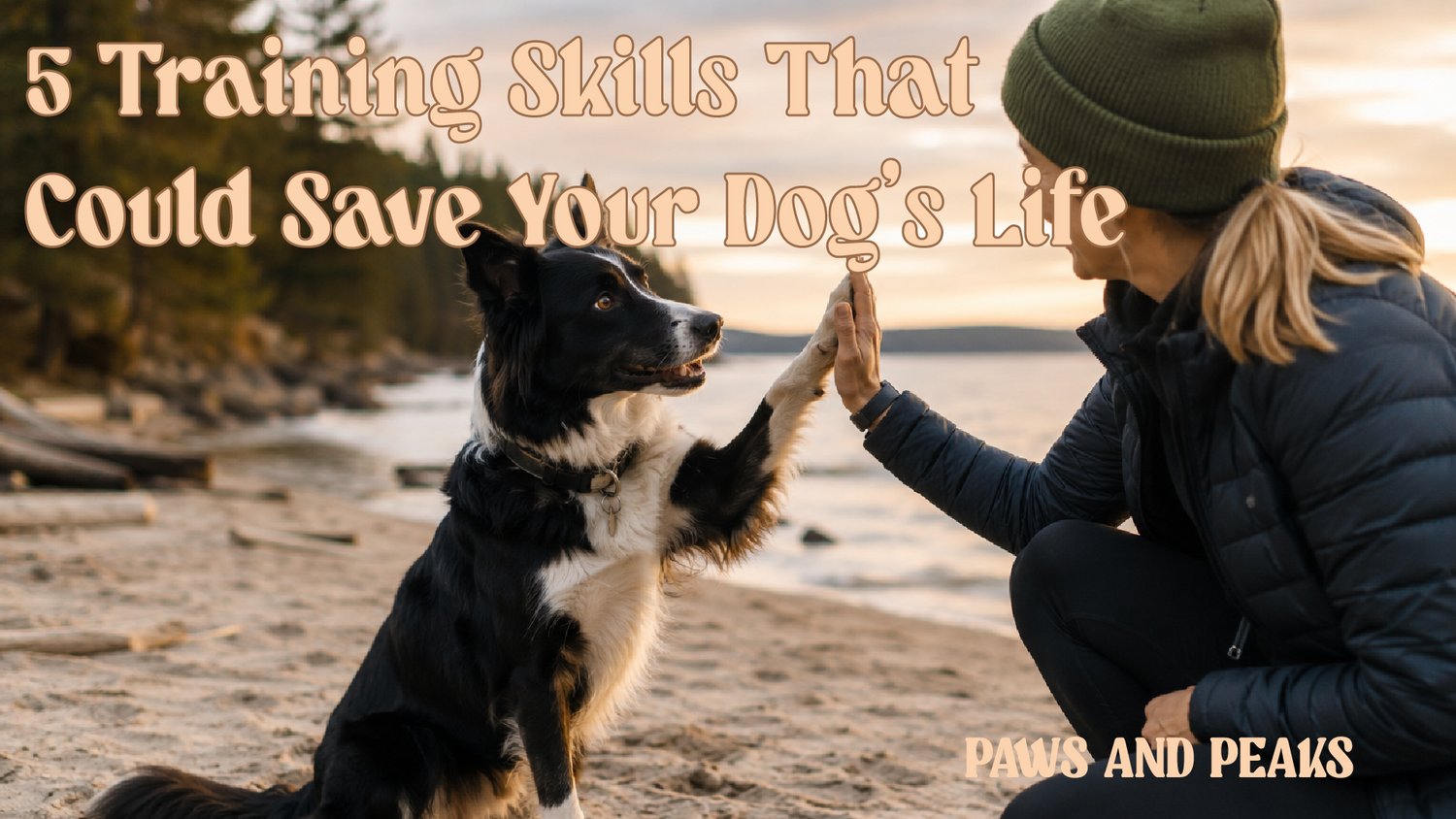
When most people think about dog training, they think about commands like sit, shake, or roll over.
While those skills can be fun, there are a handful of practical behaviours that could one day make a real difference in an emergency.
A reliable response from your dog can help prevent injuries, avoid dangerous situations, and give you valuable time when something unexpected happens.
Whether you're hiking a trail, exploring a new campsite, walking near traffic, or simply enjoying a day out together, these five skills are worth prioritising.
Because sometimes training isn't just about good behaviour. It's about safety.
1. Reliable Recall
If there is one skill every dog should know, it's recall.
Recall simply means your dog comes back to you immediately when called.
A reliable recall can prevent situations such as:
-
Running towards traffic
-
Approaching wildlife
-
Getting lost on hiking trails
-
Entering dangerous terrain
-
Running towards other dogs or people
The key is consistency.
Practice in low distraction environments before gradually increasing difficulty.
The goal is for your dog to respond even when something more exciting is happening around them.
2. The Emergency Stop
An emergency stop teaches your dog to immediately stop moving when given a specific cue.
This skill can be invaluable if your dog is:
-
Running towards a road
-
Chasing wildlife
-
Approaching a hazard
-
Heading towards unstable terrain
Many owners never train an emergency stop because they assume recall is enough.
In reality, there are situations where stopping your dog instantly is safer than calling them back.
3. Leave It
Dogs naturally investigate the world with their mouths.
Unfortunately, that can sometimes lead them straight towards danger.
A strong "leave it" command can help prevent:
-
Eating toxic foods
-
Picking up dangerous objects
-
Consuming bait
-
Investigating snakes
-
Swallowing foreign items
This simple skill can prevent countless emergency vet visits.
It's one of the easiest behaviours to teach and one of the most valuable.
4. Stay
A reliable stay helps your dog remain in place until released.
While it may seem basic, it can be incredibly useful in emergencies.
Examples include:
-
Keeping your dog away from a hazard
-
Managing an injury situation
-
Preventing interference during first aid
-
Maintaining control around wildlife
The longer and more reliably your dog can stay, the more options you have when dealing with unexpected situations.
5. Handling And Restraint Training
Many dogs become uncomfortable when touched in unfamiliar ways.
Unfortunately, during an emergency, you may need to:
-
Check paws for injuries
-
Examine ears
-
Inspect wounds
-
Apply first aid
-
Lift or carry your dog
Dogs that are accustomed to gentle handling are often much easier to assist when they are injured or frightened.
Practice calmly touching:
-
Paws
-
Legs
-
Ears
-
Tail
-
Mouth area
Keep sessions short and positive.
Why These Skills Matter During Emergencies
When a dog is injured, frightened, or overstimulated, clear communication becomes even more important.
Training provides a common language between you and your dog.
It allows you to:
-
Regain control quickly
-
Prevent situations from escalating
-
Reduce stress during emergencies
-
Improve safety during outdoor adventures
Even a few minutes of regular training each week can have a lasting impact.
Practising Real World Scenarios
One of the best ways to strengthen training is to practise in environments similar to where you'll actually use it.
Try working on skills during:
-
Walks
-
Hiking trails
-
Camping trips
-
Parks
-
Outdoor adventures
The more environments your dog experiences, the more reliable their responses become.
Training And First Aid Work Together
Training helps prevent emergencies.
First aid helps you respond when emergencies happen.
Together, they form an important part of responsible dog ownership.
A dog that responds reliably to commands is often easier to protect, assess, and assist when something goes wrong.
Small Skills, Big Difference
No dog owner expects an emergency.
But preparation isn't just about what you carry in your pack. It's also about what your dog knows.
By focusing on reliable recall, emergency stops, leave it, stay, and handling exercises, you're giving your dog valuable skills that could one day keep them safe.
At Paws & Peaks, we believe every adventure is better when preparation comes first.
Because sometimes the most important safety equipment isn't gear at all. It's training.
