
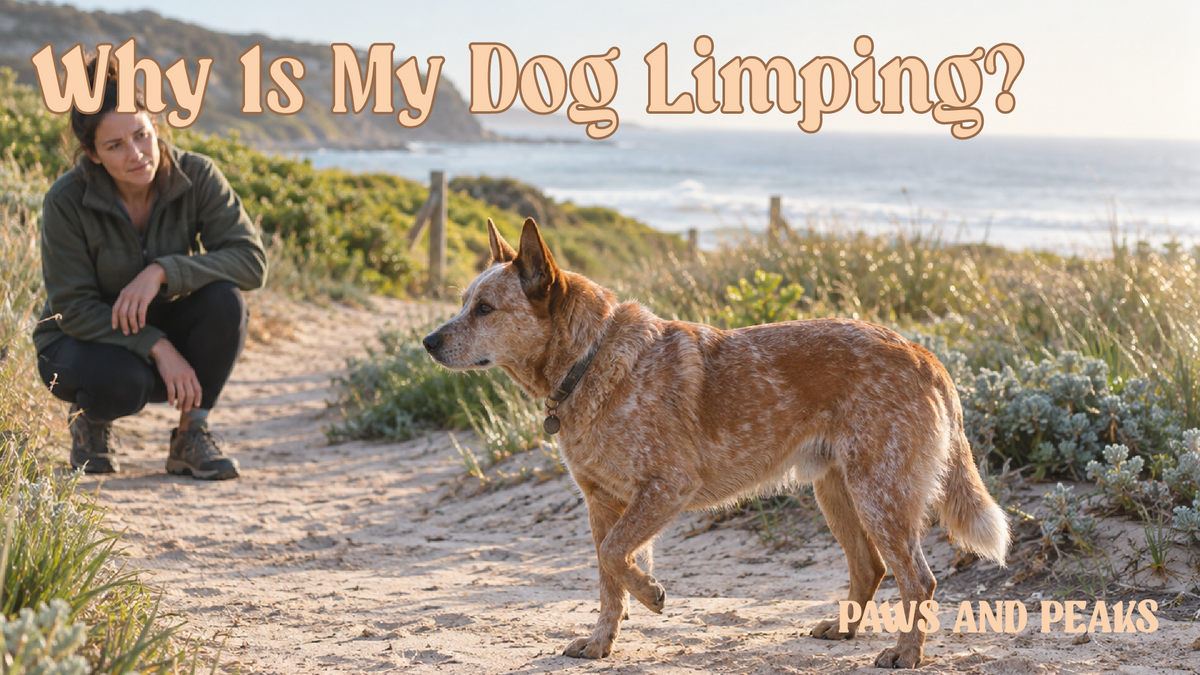
One moment your dog is moving normally, and the next they are favouring a leg, taking shorter steps or refusing to put a paw on the ground.
Limping is not a diagnosis. It is a sign that pain, weakness or another problem is affecting the way your dog moves. The cause may be as simple as a grass seed between the toes or a torn nail, but it can also involve a ligament injury, fracture, joint disease, infection or the nervous system.
The severity of the limp does not always reveal the severity of the problem. What matters is how suddenly it began, whether your dog can bear weight, what happened beforehand and whether there are any other warning signs.
Why Is My Dog Limping?
Common causes of limping include:
- a cut, thorn or grass seed in the paw
- a torn or broken nail
- a sting, bite or burn to the paw pad
- a muscle strain or sprain
- a ligament or tendon injury
- a dislocated joint or fracture
- arthritis or other joint disease
- developmental bone or joint problems
- infection or inflammation
- spinal or nerve problems
- bone disease, including cancer
Some injuries are obvious. Others cause no visible swelling or wound at all. A dog may also compensate so effectively that it is difficult to tell which leg hurts.
First, Watch How Your Dog Moves
Before touching the leg, observe your dog from a safe distance.
Look for:
- which leg appears to be affected
- whether they can place any weight on it
- whether the limp started suddenly or gradually
- stiffness after rest
- difficulty rising, sitting, turning or using stairs
- reluctance to jump, run or get into the car
- dragging or knuckling of a paw
- wobbliness or weakness in more than one leg
Do not encourage your dog to keep walking simply to see whether the limp improves. A short video of their natural movement can help your veterinarian, particularly because excitement or adrenaline may make the limp less obvious at the clinic.
Can You Check the Paw Safely?
If your dog is calm, comfortable and still placing some weight on the leg, begin with a gentle visual check of the paw.
Look at:
- the paw pads for cuts, grazes, burns or swelling
- between the toes for thorns, grass seeds, stones or other debris
- each nail for cracks, bleeding or damage
- the top and sides of the paw for redness, bites or stings
- whether one area looks warmer or more swollen than the other paw
Use good lighting and compare it with the same paw on the opposite side. Stop immediately if your dog pulls away, cries, growls or tries to bite. Pain can make even a normally gentle dog react unexpectedly.
Do not squeeze the limb, repeatedly bend the joints or try to “test” whether a bone is broken. If an object is deeply embedded, the nail is badly torn or the paw is very painful, leave it in place and contact a veterinarian.
Cuts, Nails and Paw-Pad Injuries
Small paw injuries can cause a surprisingly noticeable limp because every step places pressure on the area.
A superficial graze may be manageable with gentle cleaning and rest, but veterinary advice is appropriate if:
- bleeding does not stop with steady, gentle pressure
- the wound is deep, gaping, contaminated or caused by a bite
- part of a nail has torn away
- something is embedded in the paw
- the pad is blistered, peeling or badly damaged
- swelling, discharge, heat or worsening pain develops
Do not apply tight bandages without veterinary guidance. Bandages that slip, become wet or restrict circulation can create additional injury.
Strains, Sprains and Soft-Tissue Injuries
A dog may begin limping after running, rough play, slipping, jumping or landing awkwardly. Muscles, tendons and ligaments can all be injured even when there is no external wound.
Signs may include:
- a limp that appeared after activity
- stiffness after resting
- reluctance to stretch or use the leg normally
- local tenderness or swelling
- reduced interest in exercise
Restrict activity while you arrange veterinary advice. Lead your dog only for short toilet breaks and avoid running, stairs, jumping, rough play and slippery floors.
Do not massage, stretch or repeatedly manipulate a newly painful area. What appears to be a mild strain could be a more significant ligament, joint or bone injury.
Joint and Ligament Problems
Joint conditions can cause sudden or gradual lameness.
A cranial cruciate ligament injury in the knee may cause sudden hind-leg limping or an inability to bear weight. Patellar luxation can cause some dogs to briefly skip or hold up a hind leg before walking normally again. Hip or elbow dysplasia and arthritis may cause stiffness, difficulty rising and reduced willingness to exercise.
Older dogs are more likely to experience degenerative joint disease, but persistent limping should not be dismissed as “just ageing”. Young and growing dogs can also develop orthopaedic conditions that require assessment.
Because different problems can look similar at home, an examination is needed to locate the source of pain and decide whether imaging or other tests are required.
Could It Be a Fracture or Dislocation?
Fractures and dislocations can follow a fall, collision, animal attack or other trauma. However, weakened bone can sometimes fracture with less obvious force.
Possible signs include:
- complete refusal to bear weight
- severe pain or distress
- marked swelling
- an abnormal angle or position of the limb
- a limb that appears shorter or unstable
- grinding or unusual movement
- an open wound over the injured area
Do not try to straighten the limb or push a joint back into place. Keep your dog as still as possible and seek urgent veterinary care. A homemade splint can cause further pain or damage if it is applied incorrectly, so only use one when a veterinarian specifically directs you.
When Limping May Involve the Spine or Nerves
Not every abnormal step begins in the leg. Pain or disease affecting the neck, back, spinal cord or nerves may change the way a dog walks.
Concerning signs include:
- dragging or scuffing the toes
- walking on the top of the paw
- wobbliness or crossing the legs
- weakness affecting more than one limb
- neck or back pain
- difficulty standing
- loss of bladder or bowel control
These signs require prompt veterinary assessment. If your dog cannot stand, has rapidly worsening weakness or has lost bladder or bowel control, treat it as an emergency and minimise movement during transport.
When Is Limping an Emergency?
Seek urgent or emergency veterinary care if your dog:
- cannot bear any weight on the leg
- is in severe pain, crying or unable to settle
- has an obviously deformed, dangling or unstable limb
- has a deep wound, heavy bleeding or exposed bone
- was hit by a vehicle, fell from a height or experienced significant trauma
- is dragging a limb or walking on the top of the paw
- is weak, wobbly, collapsed or unable to stand
- has sudden swelling, especially after a possible snakebite, sting or bite
- has pale gums, breathing changes or other signs of shock
- has a hot, markedly swollen joint and seems feverish or unwell
After major trauma, injuries inside the chest or abdomen may be more urgent than the visible limp. Your dog should be assessed even if they seem able to walk.
When Should You Book a Vet Appointment?
Arrange a veterinary appointment if:
- the limp persists beyond a day or two
- it keeps returning
- it is worsening rather than improving
- your dog seems painful or less active
- there is swelling, heat or tenderness
- your dog has difficulty rising, jumping or using stairs
- a puppy or growing dog develops an unexplained limp
- your senior dog develops new or changing stiffness
- you cannot identify a minor, short-lived cause
Contact your vet sooner whenever you are concerned. Dogs often hide pain, and early assessment can improve comfort and prevent some injuries from becoming harder to manage.
What Can You Safely Do at Home?
If the limp is mild, your dog remains bright and comfortable, and there are no emergency signs:
- keep them rested in a small, calm area
- use a lead for brief toilet breaks
- prevent running, jumping, stairs and rough play
- place non-slip mats on smooth floors
- check the paw visually if your dog allows it
- record a video of the limp
- monitor appetite, energy, swelling and comfort
Do not allow a temporary improvement to become a test run. Dogs may appear better after resting and then worsen when normal activity resumes.
Never give ibuprofen, naproxen, paracetamol or another human pain medicine unless a veterinarian has specifically prescribed and dosed it for your dog. Human medications can be toxic, interact with other treatments or make veterinary management more difficult.
What Information Will Help Your Veterinarian?
Try to note:
- when the limp began
- whether it started suddenly or gradually
- any recent running, jumping, slipping, falls or rough play
- whether it is worse after rest or exercise
- whether your dog can bear weight
- any swelling, wounds or nail damage
- changes in appetite, energy or behaviour
- any previous injuries or joint problems
- all medications or supplements your dog receives
Bring a video showing your dog walking naturally from the front, side and behind if it is safe to record. Your veterinarian may observe your dog moving, examine the bones, joints, muscles and nervous system, and recommend X-rays or other tests depending on what they find.
Bringing It All Together
A limp is your dog’s way of showing that something is preventing them from moving comfortably or normally. Sometimes the cause is visible in the paw. Often, the source of pain sits higher in the limb or cannot be identified without a veterinary examination.
Start by limiting activity, watching how your dog moves and checking the paw only if they are comfortable with gentle handling. Severe pain, inability to bear weight, major trauma, limb deformity or neurological signs require urgent care. A mild limp that persists, returns or worsens also deserves a veterinary appointment.
At Paws & Peaks, we believe noticing the first small change can help protect every adventure that follows—because their adventure starts with you.
This article provides general educational information and does not replace veterinary advice. Contact your veterinarian if your dog is limping or appears painful, and seek urgent veterinary care for severe pain, major trauma, limb deformity, neurological signs or an inability to bear weight.
